Calculate Your Nevada Deposit Deadline & Statutory Damages
Enter your move-out / key-surrender date and deposit amount to check whether your landlord is past the Nevada statutory deadline under Nev. Rev. Stat. § 118A.242.
Nevada Security Deposit Law Quick Facts
| Governing Statute | Nev. Rev. Stat. § 118A.242 |
|---|---|
| Return Deadline | 30 days (30 days after termination of tenancy by handing or mailing itemized accounting and balance to tenant) |
| Maximum Deposit Cap | 3 months' rent |
| Bad-Faith / Late Penalty | Up to 2.0x — Full return of deposit plus an additional sum up to the entire deposit amount (up to 2x total) as fixed by the court |
| Small Claims Court Limit | $10,000 |
| Interest Required? | No |
| Walkthrough / Inspection | Landlord may not deduct for normal wear and tear regardless of lease clauses |
Example: On a $1,800 deposit wrongfully withheld past the 30-day deadline in Nevada, statutory provisions allow claims up to $3,600 (2.0x) in Small Claims Court (limit $10,000).
Landlord Missed the Deadline or Overcharging for Normal Wear?
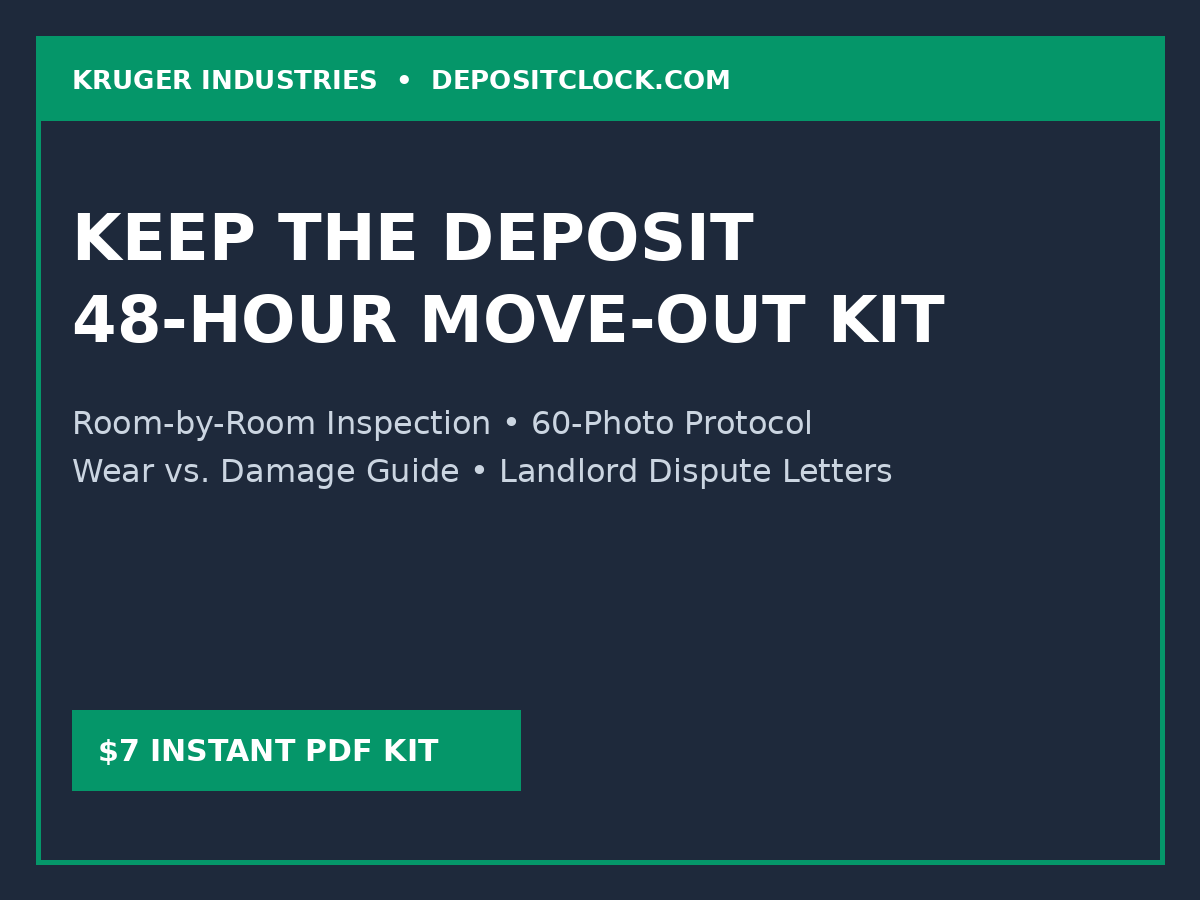
Get the complete Keep the Deposit Recovery System: our 48-Hour Move-Out & Dispute Handbook, 7 Fill-in-the-Blank Statutory Demand Letters (citing Nev. Rev. Stat. § 118A.242), the 50-State Reference Guide, and the Excel Prorated Depreciation Audit Workbook.
- Certified-mail demand templates for missed deadlines & itemized receipt requests
- HUD carpet, paint & appliance useful-life prorated deduction calculator (.xlsx + PDF)
- Room-by-room photo evidence log & small-claims preparation checklist
How to Dispute Unfair Carpet, Paint & Cleaning Deductions in Nevada
Even when a Nevada landlord mails an itemized list within 30 days, they cannot charge you for normal wear and tear or bill you 100% of the replacement cost for an aged asset that has already exhausted most of its useful life.
1. Useful-Life Proration
Standard apartment carpet depreciates over 5 years (60 months). If carpet was 4 years old at move-out, the maximum recoverable value is 20% — never a full replacement bill.
2. Statutory Demand Notice
Send a written demand via Certified Mail citing Nev. Rev. Stat. § 118A.242 and giving a firm 7-to-10 business day deadline before filing in Nevada Small Claims Court.
3. Prorated Audit Calculator
Use our free Carpet & Paint Depreciation Calculator to calculate the exact legal deduction cap in seconds.